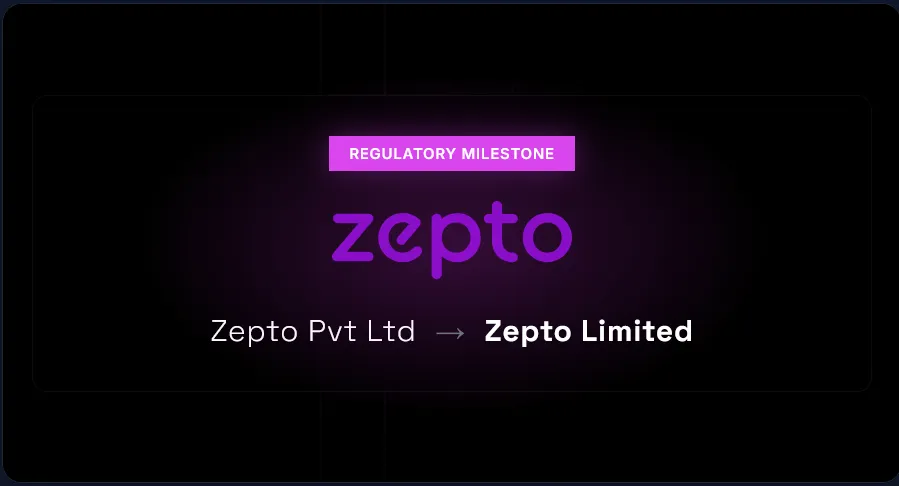
The "Private" is officially gone. In a regulatory filing that surfaced this week, Zepto confirmed it has converted into a public limited company, renaming itself from Zepto Private Limited to Zepto Limited.
While this doesn't mean the IPO is happening tomorrow, it is the most significant signal yet that the Bengaluru-based quick commerce giant is in the final lap. Shareholders passed the special resolution on November 21, setting the stage for a potential market debut by June 2026.
Company Intelligence
Zepto Limited (Formerly Kiranakart Technologies)
Regulatory Data
View MCA Master Data →
Website
zeptonow.com
Social
LinkedIn Profile
Latest Revenue (FY24)
₹4,454 Cr ▲ 2x YoY
Why The Name Change Matters
In the Indian corporate playbook, converting to a public entity is a mandatory precursor to filing a Draft Red Herring Prospectus (DRHP). It signals that the company is restructuring its board, auditing its financials for public scrutiny, and creating a shareholding structure tradable on the NSE and BSE.
Founded by Stanford dropouts Aadit Palicha and Kaivalya Vohra, Zepto has defied gravity. While many quick-commerce players folded, Zepto scaled to a $5 Billion+ valuation (as of Aug 2024).
"We are growing 20-25% every quarter on order volume... We’re able to show investors that we can deliver capital efficiency for 100% plus year-on-year growth."
— Zepto Spokesperson
The Financial Picture
The move to go public comes on the back of strong financial momentum. In FY24, Zepto's revenue more than doubled to ₹4,454 Crore (up from ₹2,026 Crore in FY23).
However, the speed comes at a cost. The company burned approximately ₹1,100 Crore in cash during the same period. The IPO timeline of mid-2026 suggests the company has an 18-month runway to improve its EBITDA margins and demonstrate a clear path to Profit After Tax (PAT).
FounderStory Takeaway
Zepto's journey from a 10-minute grocery app to a public company contender in under 5 years is historic. As they shed their "Private" tag, the real test begins: can they convince Dalal Street that 10-minute delivery is a sustainable, profitable business model?